Children and Young People's Assembly On Biodiversity Loss
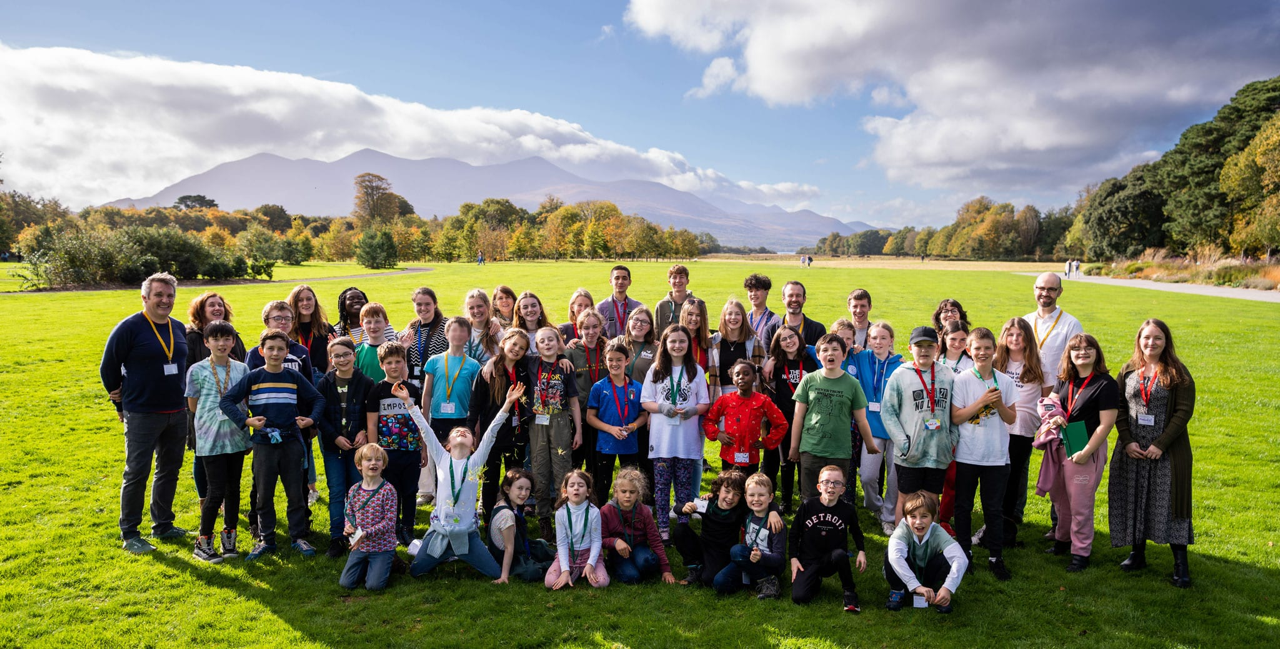
Some members of the 2022 Assembly. Photo: https://cyp-biodiversity.ie/resources/
To make sure the Children and Young People’s Assembly was designed in a way that worked for children and young people, the project was created and facilitated by an intergenerational team consisting of a Young Advisory Team and an independent research consortium.
The Young Advisory Team comprised nine children and young people from across Ireland, aged 8-16. The research consortium included experts in children’s participation, deliberative democracy, and biodiversity from Dublin City University, University College Cork, and terre des hommes, an international organisation with a focus on children’s environmental rights.
The Children and Young People’s Assembly on Biodiversity Loss was commissioned by the Department of Housing, Local Government and Heritage.
Reference slides for Hands On! conference talk: Youth, Megacities, and the New Museums of the Future
A long, excruciatingly comprehensive set of “reference slides” (and work in progress) from my short, November 2025 talk at the Hands On! Conference at the Eureka! National Children’s Museum conference Liverpool.
At some point I’ll boil this down into a shorter, 20-30 slide summary but for now I wanted to try to lay out the whole case in all its glory, warts and all.
Download/view
PDF
Slides (via Google Slides)
Contents
Intro/overview: Why build a children’s museum (or any kind of museum) now?
Interlude — 3 stories
The world we live in — cultural revolution and axiological rifts
What does this mean for young people?
What does this mean for our institutions and practice?
Change is possible
Questions I often get at this point
Helpful frameworks (tools for thinking and working together)
The Big Frikin’ Wall; Zuckerman Quadrant; Think Big, Start Small, Move Fast, Activism, & etc
The emergence of children’s rights and the rights of future generations
Leverage Points in a System (Donella Meadows)
Examples - real-world inspiration (~60 projects)
Current work – bringing the vision to scale
Conclusion
More context (cross post from LinkedIn)
Reference slides for "Youth, Megacities, and the New Museums of Tomorrow" — a short talk I gave at the Hands On! - International Association of Children in Museums conference in Liverpool in November.
I'm arguing here...laying out the evidence and rationale...that we are in the midst of a cultural revolution — a "phase change" in the functioning of the world — that is driving a wedge between young people and their human right to shape and enjoy a common future.
These changes affect all of us profoundly, and in response, I think that children's museums — all knowledge, memory, and "cultural" institutions, really — need to dramatically reconsider their purpose, scope and methods.
We need to up our game, and fast.
As Greta Thunberg told the European Parliament in 2019, seemingly a thousand years ago, "Everyone and everything has to change. But the bigger your platform, the bigger your responsibility. The bigger your carbon footprint, the bigger your moral duty."
C02 is a big driver of the cultural revolution(s) and "rift" but as I see it, the main challenge lies in the combinatory effects of climate change and biodiversity loss, digital (Big Tech) and biotech, concentrations of wealth and power, and the advent of a new kind of change (accelerating, tipping points, delays between cause and effect) that exceeds our human capacity to think, learn, and make wise decisions in an era that needs, as Zeynep Tufekci says, "all the sociological imagination we can get."
That's *a lot* to take in. It's a big problem space and a big "ask" to figure out a new way to work and act in such an uncertain time. But the great systems thinker Donella Meadows observed that paradigms in transition are actually easier to change.
And the good news is that there are loads of inspiring, practical examples to draw from for those who have the curiosity and imagination to think about our institutions and practice in new way. I've included over 60 examples of projects, exhibits, and strategies in these reference slides as well as a dozen or so frameworks and "thinking tools" that I've found particularly useful over the years.
What is the road ahead? I think it's to move beyond the idea that young people are small "future adults" to be educated and toward the idea that young people are legitimate and forceful civic actors with the rights, capabilities, and moral standing to shape the world on their own terms.
But to achieve this paradigm change, young people everywhere need dramatically better allies and institutions from the world of adults, and there are lessons here for all of museum and cultural practice.
"I came away both slightly terrified about the world young people are growing up in and inspired to do something about it" is how session chair Nick Woodrow, a Board member at Eureka! described my talk, and terrified and inspired is how I feel too ;)
No room for youth
Kids will never lie to you about whether something’s fun or not.
Connected Audience Conference — slides, references, and notes
Image of program description listing speakers
Thursday I’ll present a talk at Connected Audience 2025: Factors, Challenges and Opportunities of Cultural Participation for Youth sponsored by the IfKT, Institute for Cultural Participation Research (Institut für Kulturelle Teilhabeforschung), Berlin.
The session will be moderated by Ryan Auster of the Museum of Science, Boston, with Kaly Halkawt Lundström of Stockholm University and Dimitra Christidou and Sofie Amiri from the National Museum, Oslo, Norway.
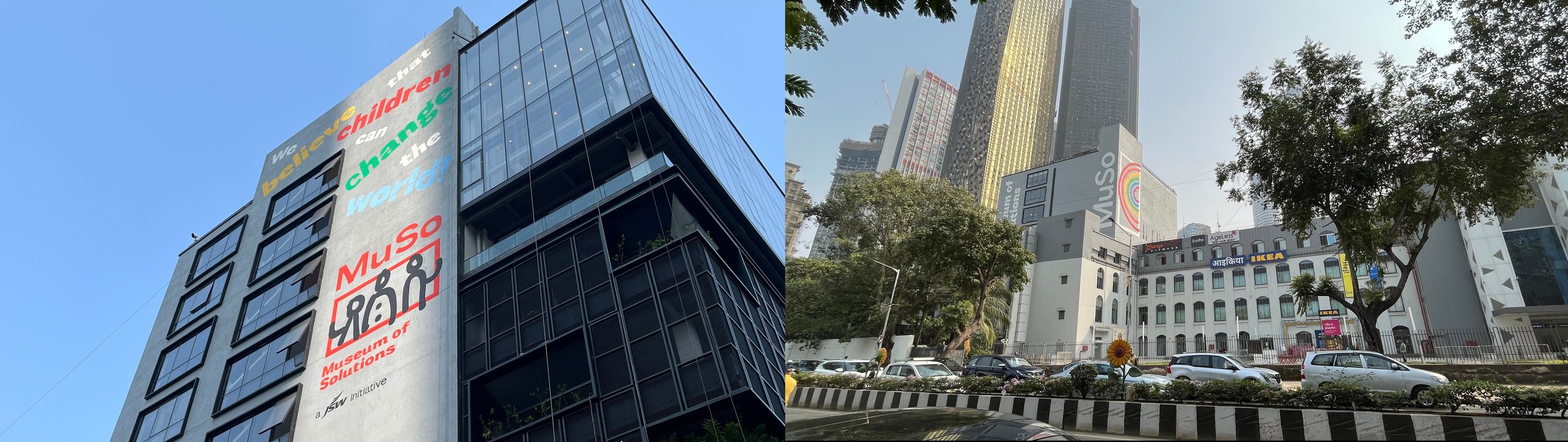
My contribution will be about why we need to create new kinds of museum institutions — everywhere, urgently, starting yesterday — that support young people as legitimate “doers” and problem-solvers in society, and how we approached developing the voice, know-how, and agency of of our visitors at the Museum of Solutions in Mumbai.
I’ll post the full talk (both shortened and full versions) as well as slides, notes, and a transcript below.
Slides and Video
Slides (Google Slides, pdf)
Photos of MuSo (my Google Photos album. All photos CC-BY Michael Peter Edson)
Transcript (in progress)
References
“The right to the future tense”
This is one of the recurring themes of Shoshana Zuboff’s stunning 2018 book The Age of Surveillance Capitalism. Honestly, Google’s AI did a better job summarizing this concept than any single source I’ve found, including Zuboff’s book iteslf: Shoshana Zuboff defines the "right to the future tense" as the fundamental human ability to imagine, intend, promise, and construct a future. It is the essence of free will, autonomy, and the ability to make meaningful choices about one's life. Zuboff argues that surveillance capitalism, which involves companies using data to control and predict behavior, encroaches upon this right by limiting individual agency and autonomy. (Google Gemini on May 18, 2025, citing an interview with Zuboff in The Harvard Gazette and a book review on Taylor & Francis Online.)
“Information-deficit model of behavior change.” Wikipedia.
“The knowing-doing gap”
Dupont, L., Jacob, S. & Philippe, H. Scientist engagement and the knowledge–action gap. Nat Ecol Evol 9, 23–33 (2025). https://doi.org/10.1038/s41559-024-02535-0
Interesting article from an insurance-industry website: Bridging the climate knowledge – action gap, by Hélène Galy. September 16, 2022. For all the improved climate science, our existing tools are holding us back from urgent action. Science is not enough: we need longer-term planning and reappraisal of values.
Moving from climate knowledge to climate action, Canadian International Development Research Centre (IDRC), September 20, 2023
Jose Antonio Gordillo Martorell, Founder and CEO of Cultural Inquiry
Hart’s Ladder of Children’s Participation
On the Opening of the Museum of Solutions (my blog; linkedIn)
Webinar, Create Dangerously: Museums in the Age of Action
via NEMO — the Network of European Museum Organizations, 14 February 2023 (Video, slides and background)
“Lego ad 1981” via Imgur user Ms Spicy Brain.
Regarding the obstacles faced by young activists
Museum of Solutions wins international Hands On! Children In Museums Award
Montage of program posters from the Museum of Solutions.
My former home, The Museum of Solutions, Mumbai (MuSo) has won the prestigious international Hands On! Children in Museums Award for 2024.
Congratulations to the MuSo team; founder Tanvi Jindal, the JSW Foundation and supporters — and the extraordinary community of young people MuSo is privileged to serve. <3
The Hands On! award has been given annually since 2011 by the European Museum Academy and the Hands On! International Association of Children in Museums to recognize excellence and innovation in children's museums "through interactive exhibits, educational programs, or inclusive design...that inspire curiosity, learning, and a sense of wonder in young minds."
In bestowing this award, the judges wrote — quite poignantly,
“The different zones on each floor address issues and ideas that are contemporary, bold and emotional. MuSo is not just about exhibits, it is about unlocking the potential within every child to change the world, using exhibitions, educational activities and public programmes to promote learning, enjoyment, reflection, creativity and knowledge. MuSo asks kids to put their ideas into practice, to make projects, finding strategies and solutions, and to realise them.”
The citation continues,
"MuSo is revolutionary, but its ethos is a model for many other countries […] MuSo has a strong belief in the power of children and that children are the changemakers. The young visitors are encouraged and empowered to think for themselves and to find methods and solutions, looking to the future, to make a better world for their communities. The museum does exceptional work, thanks to its extraordinarily committed staff. In the long run, MuSo contributes to raising responsible members of society. Who else but a children’s museum can carry out this educational task in such a holistic way?"
I'm a bit overwhelmed by the judges' words! This feels like what MuSo set out to do so many years ago and yet it still seems bold and aspirational to me, full of challenges and unknowns as well as deep significance.
(I am remembering a story MuSo's Abhik Bhattacherji told me months ago when I was still in Mumbai. As I recall, he had asked an elderly woman in the museum's library — LiSo, the Library of Solutions — how she was enjoying her visit and she burst into tears. She told him that she had grown up in great poverty, and she never imagined that in her lifetime she would see her two young grandchildren happily reading books together in such a beautiful, joyous, purposeful space.
Almost every day brought a story like that, and almost every day brought a new glimpse of just how deeply significant and impactful [and necessary!] this new kind of museum can be. Let's have many more of them. Young people, and our collective future, deserve no less.)
Leaving Mumbai
After 4 years on the project and a year as Director I’ve packed my bags and said goodbye, for now, to my fabulous friends, colleagues and community at the Museum of Solutions (MuSo), Mumbai. Thank you! I am overwhelmed by your kindness and generosity and I’ve learned more from you than you’ll ever know!
It was a privilege to help nurture this new museum and its library (LiSo, the Library of Solutions) from concept to reality; to help build and lead the founding team; and to welcome tens of thousands of visitors to our new state-of-the-art building — “a world-class space to champion the art of finding solutions,” as a reviewer at Condé Nast Traveler recently put it — unique in Mumbai and India, if not the world.
Four years ago Tanvi Jindal, MuSo’s founder, asked if I would help her think about a new “museum of solutions” she was envisioning for the site of an old industrial building in the middle of Mumbai.
How could we create a new kind of museum in one of the world’s largest and most challenging cities to catalyze action for the U.N. Sustainable Development Goals, foster new approaches to education, and help young people make meaningful change in the world together?
…And could we also make it fun?
Though Mumbai and India were new to me, this question of museums, play, and civic impact was not. Through years of work with the Smithsonian Institution, the U.N., and other cultural and civil-society conveners around the world I’ve been part of a decades-long movement to *flip the script* on traditional museum practice and help people use their own cultural institutions as platforms for the public good.
And this moment demands nothing less.
With a population of 22 million, Mumbai is indicative of the world’s 40+ megacities (cities with over 10 million inhabitants). Along with megacities like Shanghai, Jakarta, Paris, and L.A., Mumbai is home to daunting social and environmental problems — as well as astonishing creativity and drive. But the problems and the vitality often seem to live in different worlds.
Mumbai is India’s financial capital but over half of its residents live in slums. It is India’s innovation and creative hub (Bollywood! The city of dreams!) but many of its neighborhoods will be underwater by midcentury, drowned by rising seas due to climate change. Education is highly valued, but it is predominantly structured around rote memorization and test achievement, not the world as we see it today.
Young people are often caught in the middle of this dynamic, squeezed between a daily fight for survival, antiquated educational and social systems, and their own profound abilities to see and create a future filled with beautiful change.
Furthermore, young people — all people — have a fundamental human right to be involved in the decisions that will affect their futures, but too few conveners will help them find their way.
If we can learn to solve problems in places like Mumbai we stand a good chance of surviving and thriving in the 21st century. Museums like MuSo can be a kind of civic infrastructure in this regard. By being bold, inclusive, and action-oriented — rooted in reality but also participatory and fun — we can bring people together to build social capital and elevate everyone’s ability to imagine and build a future that is joyous, sustainable, and just.
What’s next for me? I don’t know — I’m still catching up on sleep and processing what I’ve learned! But with any luck, I’ll keep working in this direction: young people and their grownups in vital civic spaces, enthralled by the chance to play and explore together — making life better one small solution at a time.
//
This text is a slightly expanded version of this post on LinkedIn.
Olson is the co-executive director and chief legal counsel of Our Children's Trust, which has been representing young people in lawsuits claiming that government inaction (or worse) has violated young people's right to a clean environment. The article outlines a “historic” settlement between youth activists and the state of Hawai'i that requires the state to “cut its transportation sector’s planet-warming pollution and to consult with young people about its climate impact.”
- Clean a fish and dress a chicken
- Write a business letter
- Splice or put a fixture on an electric cord
- Operate a sewing machine and mend your own clothes
- Handle a boat safely and competently
- Save someone fron drowning using available equipment
- Read at a tenth grade level
- Listen to an adult talk with interest and empathy
- Dance with any age
The moral test of a society
It is time to put a surgeon general's warning on social media platforms, stating that social media is associated with significant mental health harms for adolescents. […]
Last fall, I gathered with students to talk about mental health and loneliness. As often happens in such gatherings, they raised the issue of social media.
After they talked about what they liked about social media — a way to stay in touch with old friends, find communities of shared interests and express themselves creatively — a young woman named Tina raised her hand. “I just don’t feel good when I use social media,” she said softly, a hint of embarrassment in her voice. One by one, they spoke about their experiences with social media: the endless comparison with other people that shredded their self-esteem, the feeling of being addicted and unable to set limits and the difficulty having real conversations on platforms that too often fostered outrage and bullying. There was a sadness in their voices, as if they knew what was happening to them but felt powerless to change it. […]
The moral test of any society is how well it protect its children. Students like Tina and mothers like Lori do not want to be told that change takes time, that the issue is too complicated or that the status quo is too hard to alter.
One of the most important lessons I learned in medical school was that in an emergency you don't have the luxury to wait for perfect information. You assess the available facts, you use your best judgment, and you act quickly.
Group selfie, Codeavor India National Event. 6 April 2023. CC-BY
I was lucky enough to be the “guest of honor” and keynote speaker at the 2024 Codeavor India National Event in Delhi. Codeavor is a kind of international hackathon and science fair with over 300,000 kids from 70+ countries using robotics, AI, and design thinking to develop their own solutions to the U.N. Sustainable Development Goals.
I was there representing the Museum of Solutions and there was a line of kids wanting my autograph [!!] and/or a selfie, so we decided to try a group selfie to save some time. :) :)
To the right of the frame with a big smile on his face is Dr. Sreejit Chakrabarty, Director of AI at GEMS Education in Dubai — a brilliant guy and fun to be with!